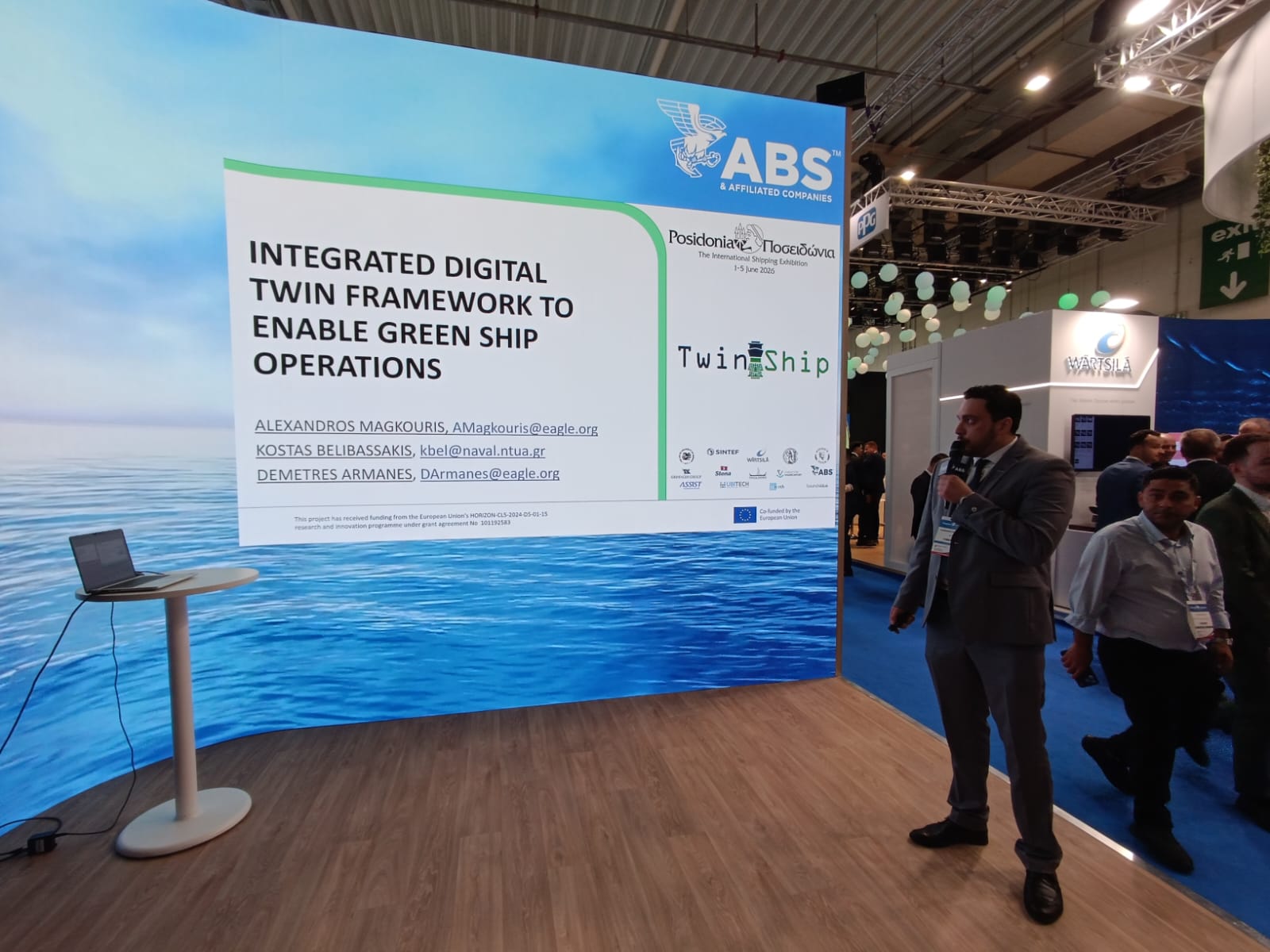
TwinShip in Data Week 2026

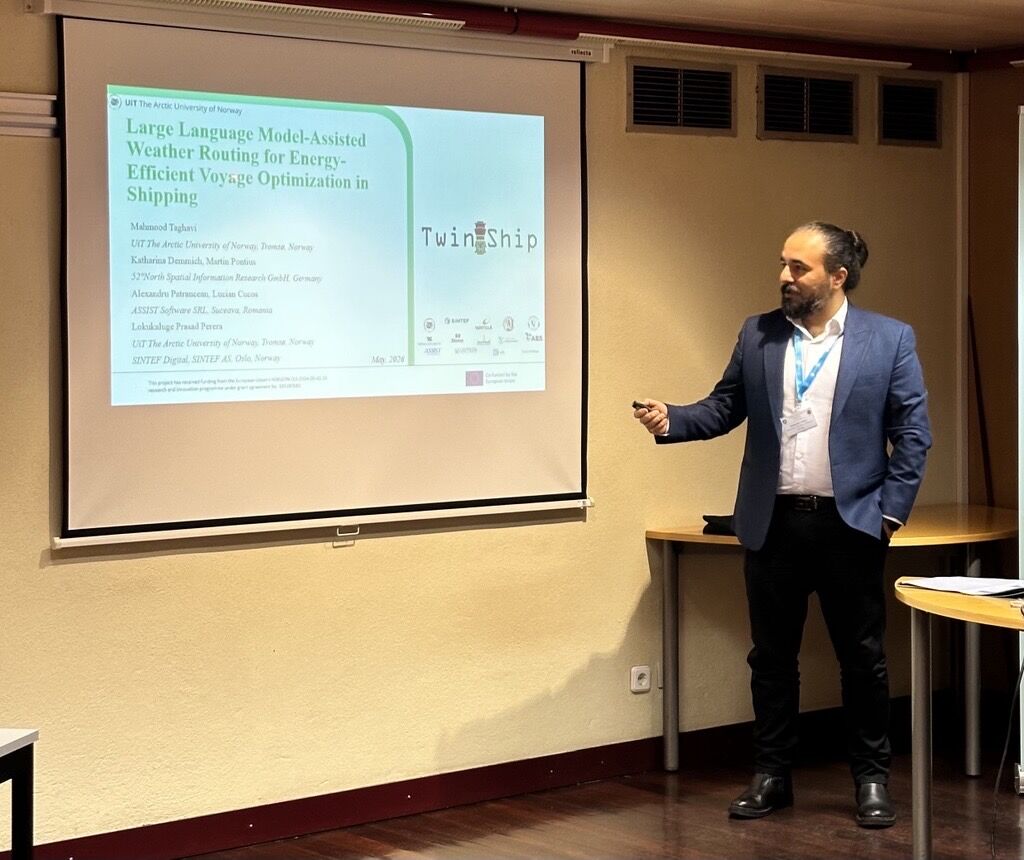
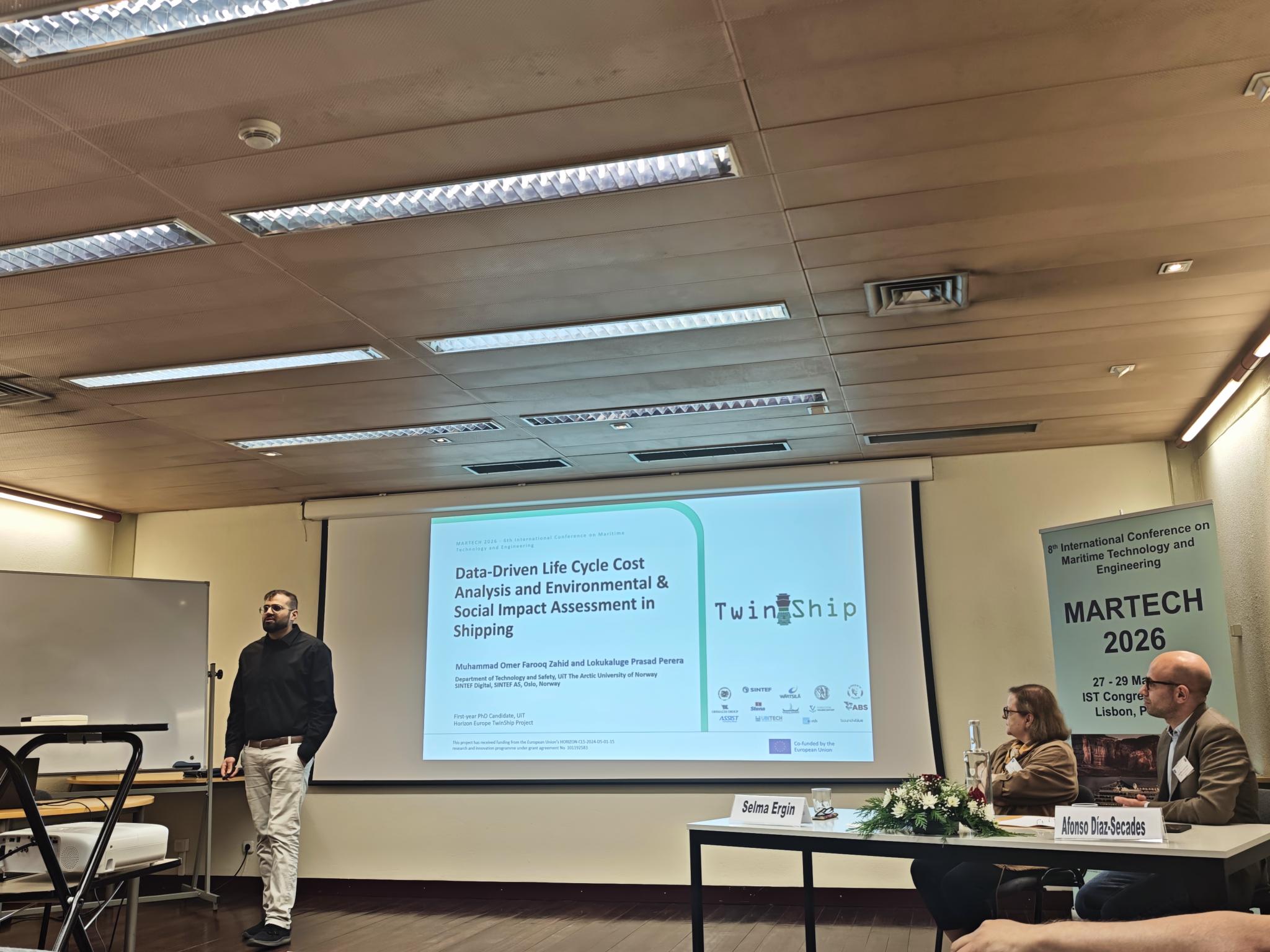
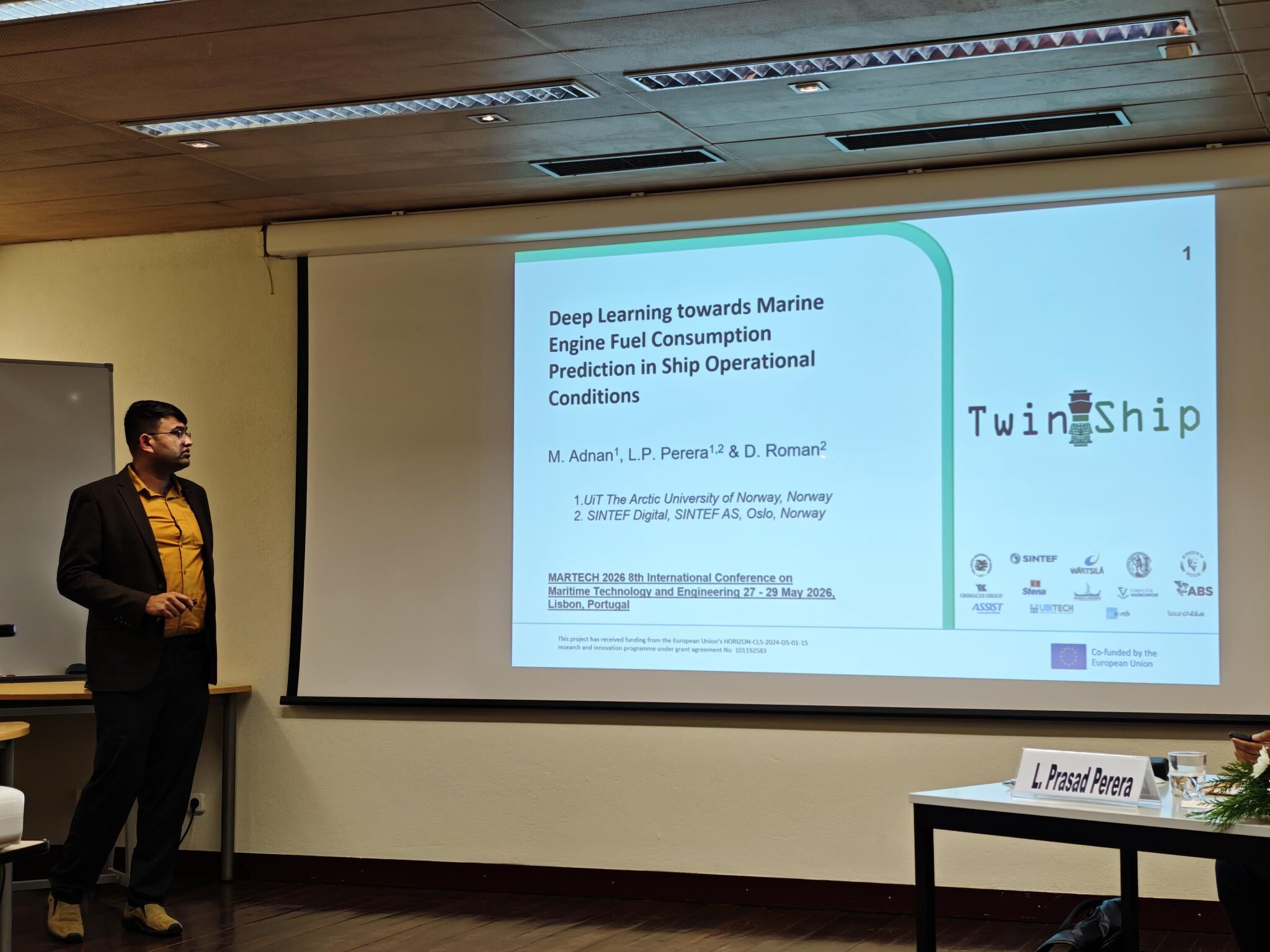
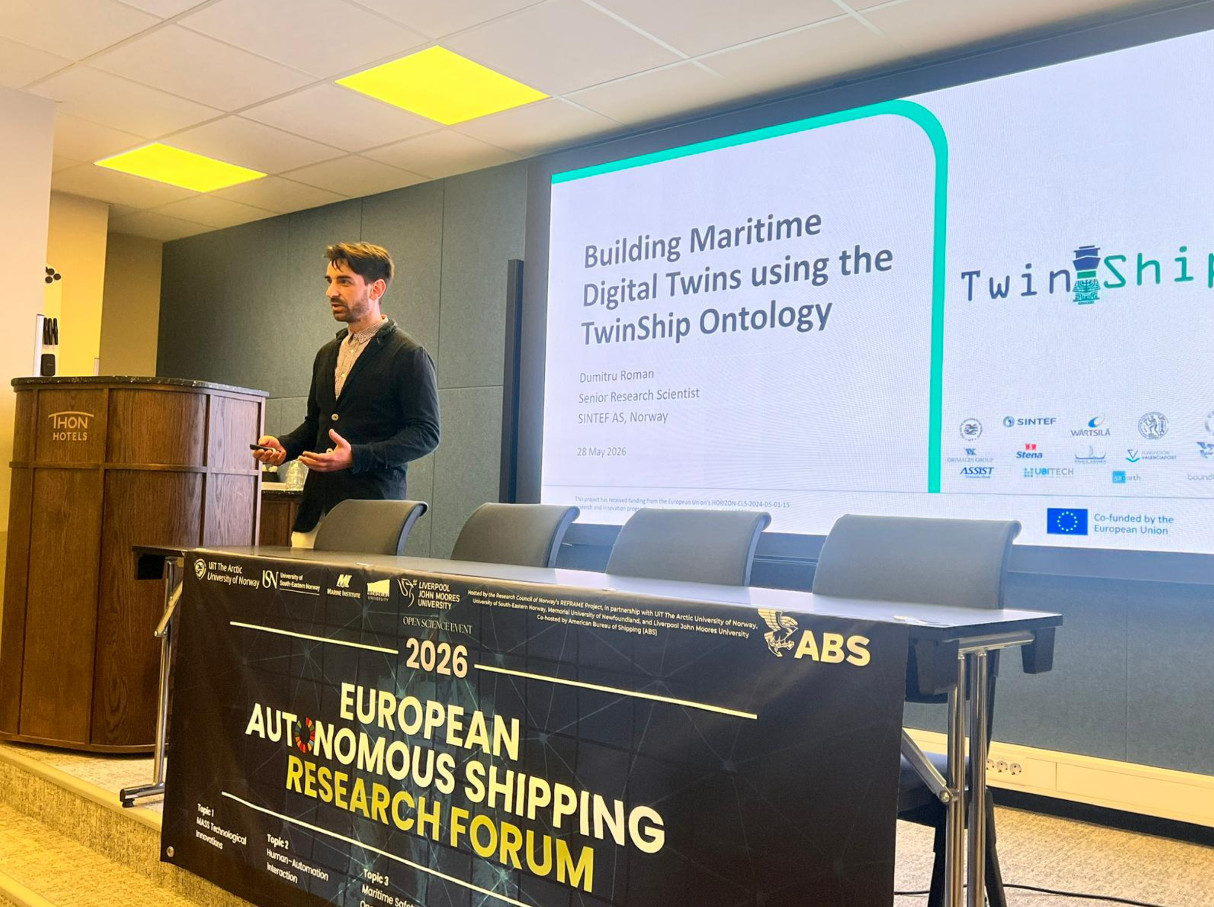
TwinShip Consortium Horizon Europe project will be presented at the Data Week, 6th of May, 2026 in Oslo, Norway, at the session: "Trusted maritime digital twins: Data management and AI compliance from ship to shore'' and you are welcome to attend and talk with the project members.

https://data-week.eu/2026-edition/programme/

dataweek

workshop

Data Quality Governance Strategy

🚒 Data quality is the foundation of trustworthy maritime digital twins.

As shipping becomes increasingly digitalized, vessels generate large volumes of operational and navigation data that can support condition monitoring, fuel efficiency improvement, route optimization, and digital twin development. But this data is often affected by missing values, sensor faults, repeated readings, measurement noise, and inconsistent records.

In our latest deliverable, the Initial Data Quality Governance Strategy (DQGS), we present a structured approach for improving the quality of maritime datasets before and during digital twin development. The deliverable can be downloaded from: the Data Quality Governance Strategy (DQGS).


The DQGS is built around a layered framework that combines:

βœ… Visual data evaluation
βœ… Rule-based preprocessing using domain knowledge
βœ… Metadata-driven quality checks
βœ… Statistical and structure-based anomaly detection
βœ… Digital-twin-supported anomaly detection and data recovery

A key principle of the framework is that data should be treated as an asset, not simply discarded. Instead of removing all anomalous or incomplete data, the approach focuses on identification, isolation, and recovery, helping preserve valuable operational information while improving model reliability.

The report also compares several preprocessing strategies, from strict structural cleaning and multivariate outlier filtering to row-preserving imputation and targeted cleaning of key performance variables. This provides flexibility when selecting the most suitable dataset for future modelling and analysis.

By integrating data governance directly into the digital twin workflow, the framework supports more reliable, traceable, and continuously improving maritime data-driven systems.

This work contributes to the development of trustworthy digital twins for cleaner, safer, and more energy-efficient shipping. πŸŒŠβš“

dqgs

deliverables

VesselAI Digital Platform Delivered.

🚒 Excited to highlight the VesselAI platform - an open-source maritime analytics platform designed to support the full data and innovation lifecycle in shipping.

πŸ“Š VesselAI brings together data ingestion, storage, exploration, SQL analytics, ETL, AI services, workflow orchestration, and digital twin capabilities in one integrated environment. This allows users to move from raw maritime data to actionable insights for vessel performance analysis, operational optimization, and environmental and economic assessment.

πŸ€– The platform supports advanced AI and machine learning workflows, including notebook environments, AI models, AI agents, and workflow management tools, while also enabling digital twin applications such as vessel and retrofit analysis, voyage planning, and optimization.

πŸ” In a sector where access to maritime data is often limited, VesselAI helps enable more open, secure, and collaborative innovation through federated data sharing, encryption mechanisms, and semantic interoperability across systems.

🌍 By supporting academia, research, and industry stakeholders, VesselAI contributes to a stronger digital ecosystem for smarter, greener, and more efficient shipping.
vapt

infographic

User Manual for VesselAI Platform

🚒 We are pleased to share – VesselAI User Manual

πŸ“˜ This public deliverable provides a structured overview of the VesselAI platform, presenting its core components, functionalities, and main user workflows. The manual explains how the platform supports the full maritime data lifecycle, from data ingestion and storage to data exploration and analysis, processes, data streaming, data governance, AI services, workflow orchestration, and digital twin (DT) and decision support system (DSS) capabilities. It is designed to help users transform raw maritime data into actionable insights for vessel performance analysis, operational optimization, and environmental and economic assessment.

βš“ In a sector where digital platforms are often proprietary and access to data is restricted, wider collaboration and innovation can be difficult. Limited data sharing reduces opportunities for research communities and R&D partners to validate AI and machine learning methods on critical maritime datasets. In this context, TwinShip will further strengthen its DT/DSS framework by leveraging the VesselAI digital platform, originally developed through the collaborative VesselAI H2020 project.

πŸ” As an open-source platform with a sophisticated architecture for large-scale data processing and advanced AI/ML applications, VesselAI is designed to support secure and seamless data sharing in the maritime sector. It introduces a federated data space with dedicated encryption mechanisms for maritime data, while also promoting semantic interoperability through shared vocabularies and ontologies, enabling a common understanding of exchanged data across different systems.

🌍 With implementations already in place at ICCS and DSSLab in Athens, and an upcoming setup at UiT in Tromsø, the platform is expanding its reach and value for academia, research, and industry stakeholders. This also strengthens resilience through a data backup strategy aligned with the 3-2-1 Rule.

πŸ‘ A big thank you to all partners and contributors involved in this work.

Now you download the deliverable from: https://www.researchgate.net/publication/403268274_User_Manual_for_VesselAI_Platform

Β 

deliverables

Page 4 of 9